Pro V-Gain — Calories, Nutrition & Ingredients
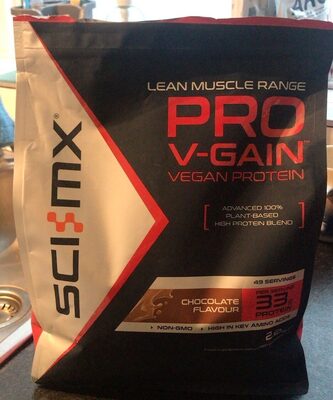
- Calories
- 160per 100 g
- Protein
- 33 gper 100 g
- Carbs
- 3.6 gper 100 g
- Fat
- 1.1 gper 100 g
Where to buy
Paid links: we may earn a commission at no extra cost to you. As an Amazon Associate I earn from qualifying purchases. About these linksPer serving (45 g): 72 calories. Per 100 g: 160 calories, 33 g protein, 1.1 g fat.
Nutrition
Portion size: 45 g
| Typical values | Per 100 g | Per portion (%RI*) |
|---|---|---|
| Energy | 669 kJ / 160 kcal | 301 kJ / 72 kcal (4%) |
| Fat | 1.1 g | 0.5 g (1%) |
| of which saturates | 0 g | 0 g (0%) |
| Carbohydrate | 3.6 g | 1.6 g (1%) |
| of which sugars | 0 g | 0 g (0%) |
| Fibre | 2.8 g | 1.3 g |
| Protein | 33 g | 14.8 g (30%) |
| Salt | 1.10 g | 0.50 g (8%) |
*Reference intake of an average adult (8400 kJ / 2000 kcal)
Calculated from Open Food Facts per-100 g data for the stated serving; values may differ slightly from the package label because of rounding.
Per 100 g and custom amounts
Nutrition per amount
Ingredient flags
Data: Open Food Facts (ODbL) · Photo: Open Food Facts contributors (CC BY-SA)
Where to buy Pro V-Gain
Search Amazon for this product. Stock and prices vary by store and location.
Paid links: we may earn a commission at no extra cost to you. As an Amazon Associate I earn from qualifying purchases. Prices and availability are set by the retailer. About these linksFrequently asked questions
How many calories are in Pro V-Gain?
Per 100 g of Pro V-Gain there are 160 calories.
How much protein is in Pro V-Gain?
Per 100 g of Pro V-Gain there are 33.0 g protein.
How many carbohydrates are in Pro V-Gain?
Per 100 g of Pro V-Gain there are 3.6 g carbohydrates. Of which 0.0 g sugars.
How much sugar is in Pro V-Gain?
Per 100 g of Pro V-Gain there are 0.0 g sugars.
How much sodium (salt) is in Pro V-Gain?
Per 100 g of Pro V-Gain there are 440.0 mg sodium. UK guidance is for adults to eat no more than 6 g of salt (about 2,400 mg of sodium) a day.
How much fibre is in Pro V-Gain?
Per 100 g of Pro V-Gain there are 2.8 g fibre. Fibre is important for digestive health.
Nutrition breakdown
Macronutrients
Types of fat
Related guides
Learn more about nutrition and food labels:
- Traffic-Light Food Labels Explained
- How to Read a UK Nutrition Label
- Salt and Sodium on Food Labels: How to Read Them
- Sugars on Food Labels: Total Sugars vs Free Sugars
- Food Additives and E Numbers in the UK
Browse products by nutrient
Find products by calories, protein, sugar and more: