Ginger Beer — Calories, Nutrition & Ingredients
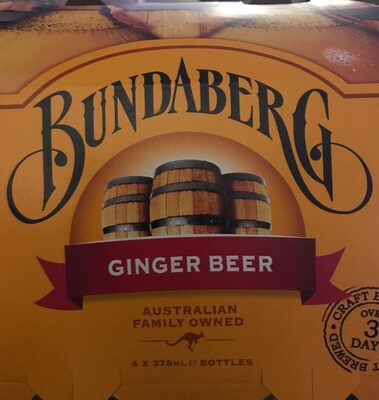
- Calories
- 21per 100 ml
- Protein
- 0 gper 100 ml
- Carbs
- 5.2 gper 100 ml
- Fat
- 0 gper 100 ml
Where to buy
Paid links: we may earn a commission at no extra cost to you. As an Amazon Associate I earn from qualifying purchases. About these linksPer 100 ml, Ginger Beer has 21 calories, 0 g protein and 0 g fat.
Nutrition
| Typical values | Per 100 ml |
|---|---|
| Energy | 88 kJ / 21 kcal |
| Fat | 0 g |
| of which saturates | 0 g |
| Carbohydrate | 5.2 g |
| of which sugars | 4.9 g |
| Protein | 0 g |
| Salt | 0.03 g |
Calculated from Open Food Facts per-100 g data for the stated serving; values may differ slightly from the package label because of rounding.
Per 100 ml and custom amounts
Nutrition per amount
Ingredient flags
Data: Open Food Facts (ODbL) · Photo: Open Food Facts contributors (CC BY-SA)
Where to buy Ginger Beer
Search Amazon for this product. Stock and prices vary by store and location.
Paid links: we may earn a commission at no extra cost to you. As an Amazon Associate I earn from qualifying purchases. Prices and availability are set by the retailer. About these linksIngredients
Acid, Antioxidant, Ascorbic acid, Carbonated water, Citric acid, Flavouring, Ginger, Malic acid, Potassium sorbate, Preservative, Sodium benzoate, Sucralose, Sugar, Sweetener, Thickener, Xanthan gum, Yeast
Frequently asked questions
How many calories are in Ginger Beer?
Per 100 g of Ginger Beer there are 21 calories.
How much protein is in Ginger Beer?
Per 100 g of Ginger Beer there are 0.0 g protein.
How many carbohydrates are in Ginger Beer?
Per 100 g of Ginger Beer there are 5.2 g carbohydrates. Of which 4.9 g sugars.
How much sugar is in Ginger Beer?
Per 100 g of Ginger Beer there are 4.9 g sugars.
How much sodium (salt) is in Ginger Beer?
Per 100 g of Ginger Beer there are 12.0 mg sodium. UK guidance is for adults to eat no more than 6 g of salt (about 2,400 mg of sodium) a day.
What are the main ingredients in Ginger Beer?
The main ingredients in Ginger Beer are: Acid, Antioxidant, Ascorbic acid, Carbonated water, Citric acid.
Level of processing
Nutrition breakdown
Macronutrients
Types of fat
Related guides
Learn more about nutrition and food labels:
- Traffic-Light Food Labels Explained
- How to Read a UK Nutrition Label
- Salt and Sodium on Food Labels: How to Read Them
- Sugars on Food Labels: Total Sugars vs Free Sugars
- Food Additives and E Numbers in the UK
Browse products by nutrient
Find products by calories, protein, sugar and more: